
Last updated September 10, 2026
Full 25-point door and opener safety check with every visit - springs, cables, rollers, tracks, and your LiftMaster or Chamberlain opener included
You get a price before we start. It does not change when the truck arrives.
 Before
 After
After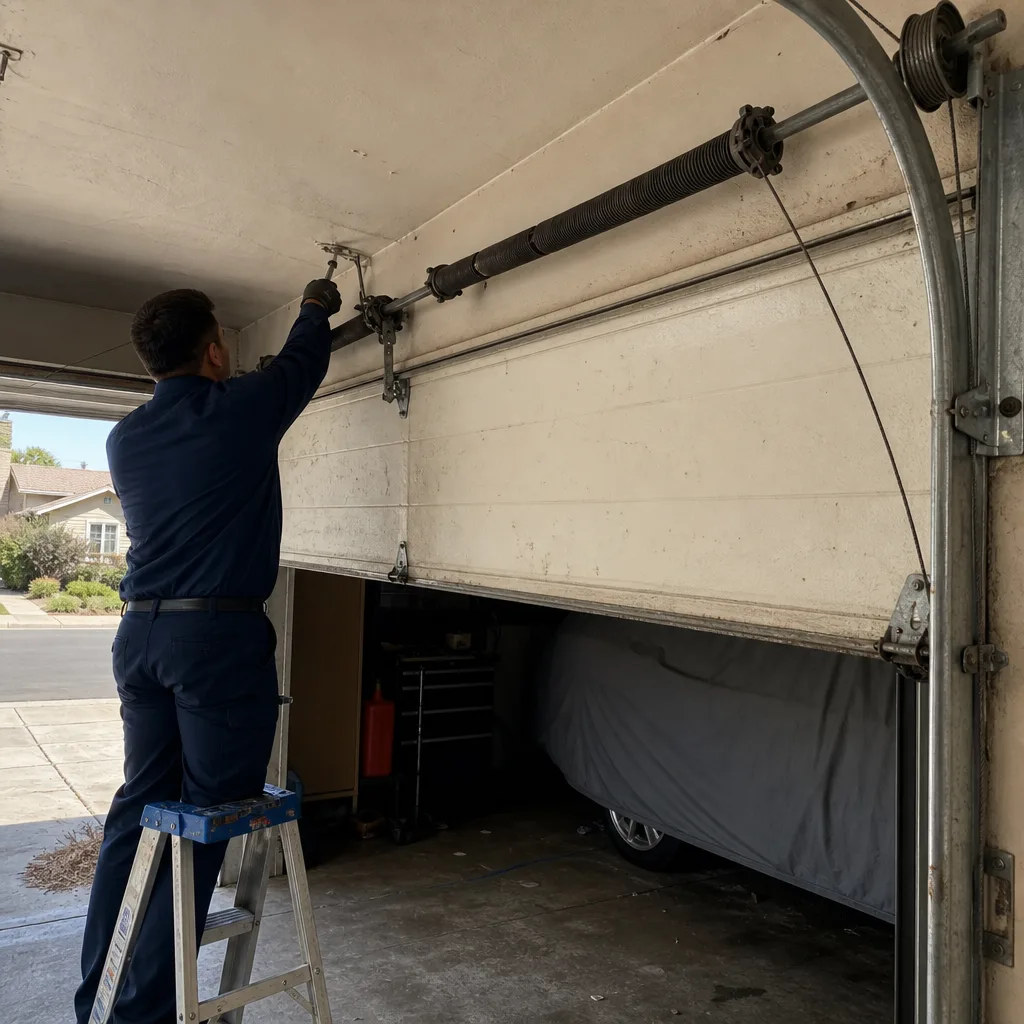 Before
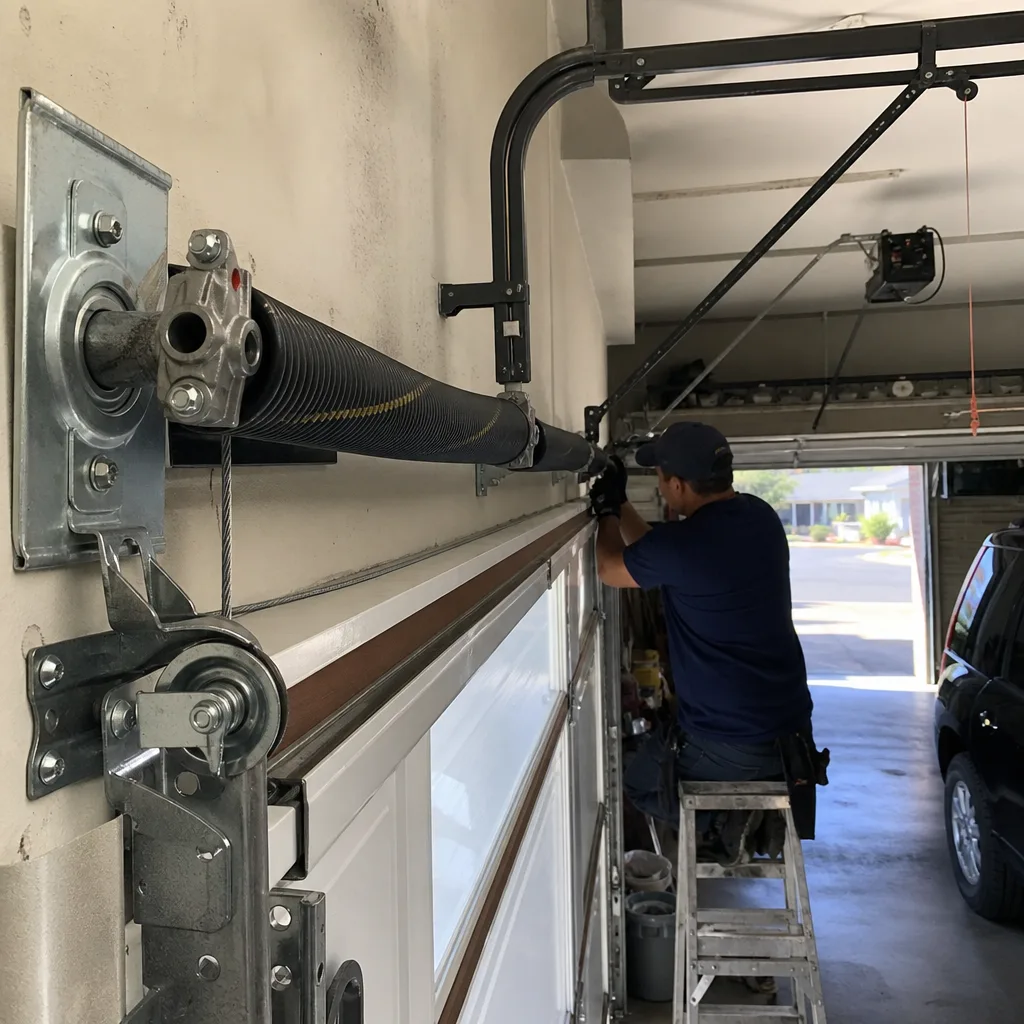 After
After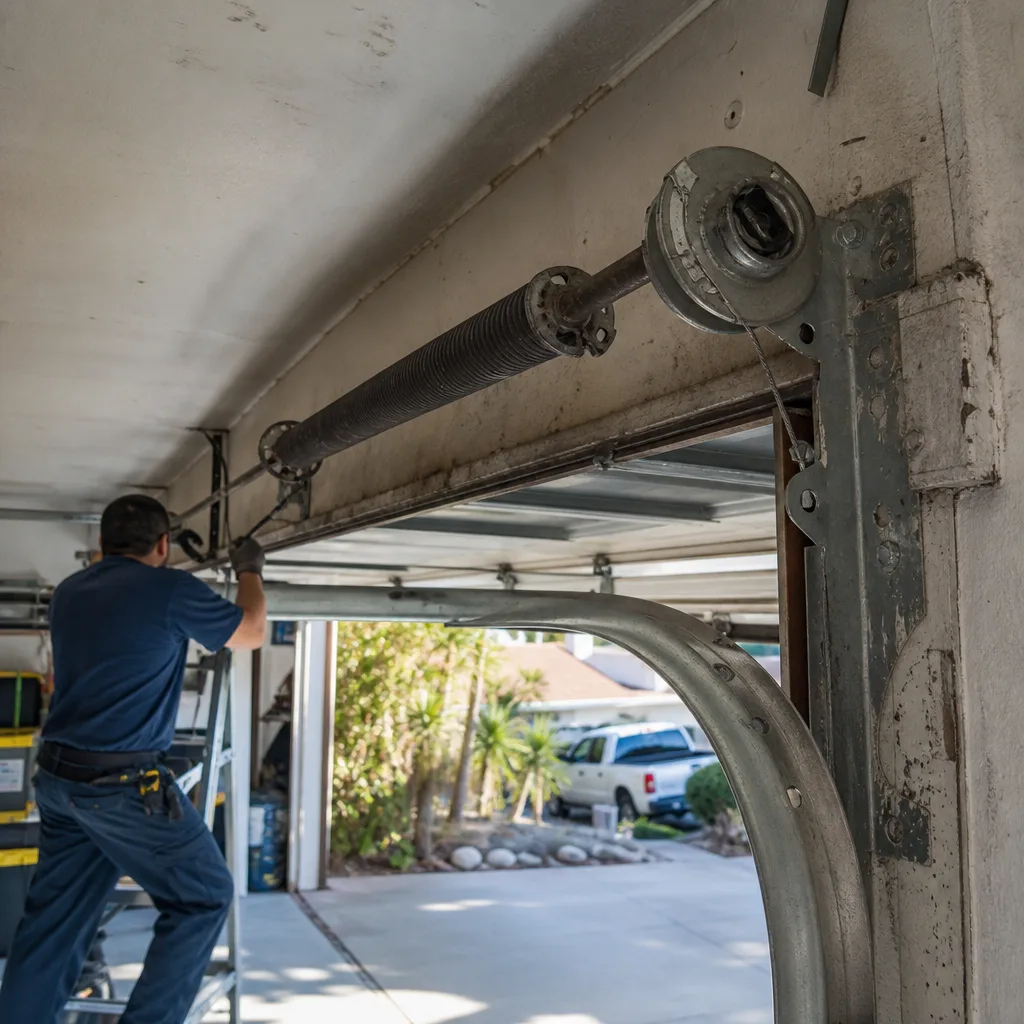 Before
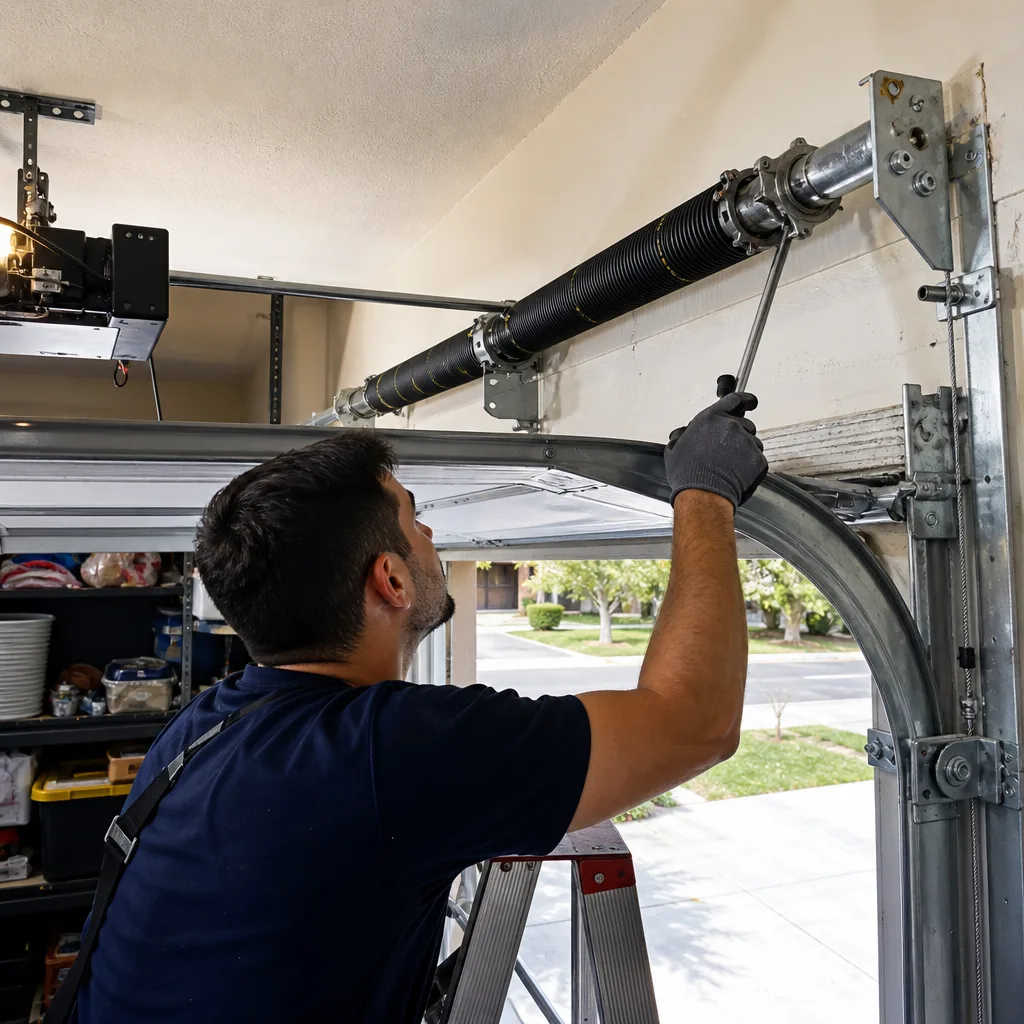 After
AfterGarage Door Permits, Codes & Inspections in CA: What You Need to Know
A garage door replacement flagged as unpermitted work cost one San Diego County homeowner a $4,200 retroactive inspection and escrow delay - for a job the contractor said “never needs a permit.” That assumption is common, and it is wrong often enough to matter. In this guide, we will walk you through the precise California Building Code thresholds that trigger permit requirements, how Santee processes garage door permits differently than unincorporated San Diego County, what “like-for-like replacement” actually means in code language, and how to protect yourself at resale. For Garage Door Warning Signs: A Santee Homeowner’s Reference Guide, see our related resource. Whether you are in Santee, El Cajon, or Lakeside, the rules are specific - and the consequences of guessing are real.
Quick Answer
Most garage door replacements in California do not require a permit if the work is a true “like-for-like” swap with no structural, electrical, or fire-rating changes. However, permits are required when you alter the opening size, change a fire-rated door in an attached garage, modify structural supports, or run new electrical circuits for the opener. In Santee, the City of Santee Building Division handles permits for properties within city limits, while unincorporated county parcels fall under the County of San Diego Department of Planning and Development.
Table of Contents
- When Is a Permit Required for Garage Door Work in California?
- What “Like-for-Like Replacement” Means - and Where It Stops
- How Santee Processes Garage Door Permits vs. Unincorporated San Diego County
- UL 325 Safety Standards: What Installers Must Test Before Leaving
- Fire-Rated Doors in Attached Garages: The Hidden Requirement
- Opener Electrical Work: When It Triggers a Permit
- How to Confirm Your Work Is Documented - and Why It Matters at Resale
- Common Mistakes to Avoid
- When to Call a Professional
- Frequently Asked Questions
- The Bottom Line
When Is a Permit Required for Garage Door Work in California?
California Building Code Section 105.1 requires permits for construction, alteration, movement, enlargement, replacement, repair, equipment, use and occupancy, removal, and demolition of any building or structure. That sounds sweeping, but garage doors occupy a specific carve-out that most homeowners never learn until it is too late.
The California Residential Code and the California Existing Building Code both reference “ordinary repairs” as work exempt from permit requirements. A garage door replacement qualifies as an ordinary repair only when it meets strict conditions. The door must not alter the structural integrity of the opening, must not change the fire-resistance rating, and must not involve new electrical work beyond plug-in replacement.
Here are the specific thresholds that trigger a permit requirement:
- Structural modification: Changing the width or height of the rough opening, removing or altering king studs, jack studs, or header beams. Even widening by four inches requires engineering review.
- Fire-rated door changes: Replacing a fire-rated door in an attached garage with a non-rated door, or vice versa. This applies to most homes built after 1980 in Santee and throughout California.
- New electrical circuits: Running dedicated 120V wiring for a new opener location, adding receptacles, or upgrading from a plug-in to hardwired installation.
- Load-path alterations: Any change affecting how wind or seismic forces transfer through the garage opening. This is particularly relevant in Santee’s Zone D seismic design category.
- Historic district or HOA overlay: Some Santee neighborhoods with design review boards require permits for aesthetic changes even when the building code does not.
The 2022 California Building Code update clarified that “replacement in kind” - the same size, same type, same operation - remains exempt. But the moment you upgrade from a single-layer steel door to an insulated sandwich door with a different weight, you may trigger structural review. The added weight changes the spring sizing, track loading, and header reaction forces. In our experience across Santee and eastern San Diego County, about one in four “simple replacements” we assess actually involves a code-triggering change the homeowner did not anticipate.
Permit costs vary by jurisdiction. Santee’s Building Division charges based on valuation, with a minimum permit fee for residential garage door work typically running $150-$400 depending on scope. Unincorporated San Diego County uses a similar valuation schedule but with different fee multipliers. Both jurisdictions require two inspections for permitted work: a rough inspection if structural or electrical changes are involved, and a final inspection for code compliance.
What “Like-for-Like Replacement” Means - and Where It Stops
“Like-for-like” is the phrase that determines whether your garage door replacement needs a permit, and it is narrower than most contractors treat it. In California code language, it means the replacement item is identical in dimensions, materials, weight, operation, and performance characteristics to the item being removed. Not similar. Not comparable. Identical.
This distinction matters because garage door technology has changed significantly. A 1995 non-insulated steel door in a Santee tract home weighs roughly 80-100 pounds for a 16-foot width. A modern insulated steel door with polyurethane core can weigh 140-180 pounds for the same dimensions. The track hardware, spring system, and opener capacity all require recalculation. That is not like-for-like under code interpretation, even though both are “steel sectional doors.”
Here is how to evaluate whether your planned replacement stays within the exemption:
- Measure the exact rough opening dimensions. Height and width must remain unchanged. The finished opening can shift slightly with trim, but the structural opening cannot.
- Weigh the existing door or check the manufacturer’s specification label. If the new door exceeds the original by more than 10 percent, most building officials will classify this as a change requiring review.
- Confirm the operation type. Swinging a sectional door for a roll-up door changes the header loading and side-room requirements. That is structural.
- Verify the fire rating. Check the existing door’s label edge for a fire-rating stamp (typically 20-minute rating for garage-to-house doors). The replacement must match exactly.
- Check the opener electrical. If the existing opener plugs into a ceiling receptacle and the new one does the same, no electrical permit. If you need to add a receptacle or hardwire, permit required.
In Santee’s older neighborhoods like Sky Ranch and Riverglen, we regularly encounter doors installed before fire-rating requirements took effect in the 1980s. Homeowners assume replacement is straightforward, only to learn their new door must meet current standards for attached garages. Our Garage Door Repair Maintenance Checklist for Santee Homeowners covers how to spot these compliance issues early. The cost difference between a standard door and a fire-rated assembly runs $200-$400, but the permit and inspection add time and paperwork that many contractors skip - leaving the homeowner exposed.
The stopping point for like-for-like is simple: any improvement that makes the door better than it was probably changes something the code tracks. Better insulation, quieter operation, heavier construction, smarter opener features - these all sound like upgrades, and they are. But they are not exempt repairs.
How Santee Processes Garage Door Permits vs. Unincorporated San Diego County
Where your property sits determines who reviews your permit, what they charge, and how long the process takes. Santee incorporated in 1980 and maintains its own Building Division at City Hall on Magnolia Avenue. Properties with Santee mailing addresses but located in unincorporated county pockets - common near Fanita Ranch and along the northern boundary - fall under San Diego County jurisdiction instead.
The City of Santee Building Division uses the online Mainspring Garage Door Co. home permit portal for initial applications, but garage door permits typically require in-person plan submission because the scope description affects fee calculation. You will need:
- A site plan showing the garage location on the property
- Elevation drawings of the proposed door (manufacturer cut sheets usually suffice)
- Structural calculations if the opening size changes or the door weight increases significantly
- Electrical plan if new circuitry is involved
- Homeowner or contractor application with state contractor license number
Santee’s turnaround for simple garage door permits runs 5-10 business days for plan check, with inspections available within 48 hours of request. The city participates in the San Diego Regional Automated Inspection Request system, so scheduling is done online or by phone.
Unincorporated San Diego County processes through the Department of Planning and Development’s DROPS online system. County plan check for residential garage door permits takes 10-15 business days typically, longer during peak construction seasons. The county also requires Green Building Standards compliance documentation for replacements exceeding certain valuation thresholds, a step Santee does not add.
For homeowners in Santee proper, the practical difference is speed and accessibility. Santee Building Division staff answer the phone directly, and the counter on Magnolia Avenue takes walk-ins. County processing is more bureaucratic by design, with less flexibility for informal consultation. We have had Santee permits approved in three days for straightforward like-for-like replacements with proper documentation, while similar county applications sat for two weeks awaiting initial review.
Both jurisdictions enforce the same California Building Code standards. The difference is administrative, not substantive. But administrative delays cost money if you have a contractor scheduled and materials on order. We always confirm jurisdiction before quoting timeline on any replacement that might require permitting.
UL 325 Safety Standards: What Installers Must Test Before Leaving
Every automatic garage door opener sold in the United States must comply with UL 325, the Underwriters Laboratories standard for door, drapery, gate, louver, and window operators and systems. California adopts this by reference in the Electrical Code, and enforcement falls to local building inspectors. But the critical point most homeowners miss: UL 325 compliance is not just about the opener box you buy. It is about how the installer configures and tests the complete system before leaving your property.
The standard has been updated multiple times, most significantly in 1993, 2010, and 2018. Each revision tightened entrapment protection requirements. A 1990s opener might lack photoelectric sensors entirely, relying only on mechanical reversal on contact. That configuration is non-compliant for new installations today, and in Santee, an inspector will fail a final inspection if the sensor configuration does not match current UL 325 edition requirements.
Here is what a compliant installation must include and what the installer must verify:
- Primary entrapment protection: Photoelectric sensors (safety eyes) mounted no higher than six inches above the floor, aligned and unobstructed. These must reverse the door immediately when the beam is interrupted during closing.
- Secondary entrapment protection: Force-sensing reversal built into the opener motor. The door must reverse within two seconds of contact with a test object (typically a 2×4 laid flat) placed in the center of the door path.
- Wall control station: Must be in constant sight of the door, with a stop button that halts movement in either direction. Wireless controls alone do not satisfy this.
- Warning labels and instructions: UL 325 requires specific placards near wall controls and on the door itself, in English and Spanish, describing entrapment hazards and testing procedures.
- System integration test: The installer must demonstrate that all components work together - opener, sensors, wall control, and any remote devices - under normal and simulated fault conditions.
In our work across Santee, from the hillside homes in Carlton Oaks to the single-story ranchers near Mission Trails, we find that roughly 30 percent of existing installations have sensor misalignment, improper mounting height, or outdated opener units that predate current UL 325 requirements. A permit inspection catches these. A non-permitted replacement often does not.
The brands we install - LiftMaster, Chamberlain, and Genie - all ship with UL 325-compliant hardware, but the installer must still configure travel limits, force settings, and sensor alignment for each specific door weight and track geometry. A heavy insulated door on a high-lift track requires different force calibration than a lightweight door on standard radius track. Factory defaults are starting points, not finished configurations.
California law also requires that installers provide written documentation of the safety test results. We leave a completed checklist with every opener installation, signed by the technician, noting the date, test results, and any conditions observed. This document becomes part of your home’s maintenance record and can be produced at inspection or resale.
Fire-Rated Doors in Attached Garages: The Hidden Requirement
The requirement that most surprises Santee homeowners is the fire-rated door mandate for attached garages. California Residential Code Section R302.5.1 requires a 20-minute fire-rated door or equivalent assembly between an attached garage and any sleeping room, and between the garage and the residence itself in most configurations. The garage door facing the driveway is not typically fire-rated. But the interior passage door is, and any replacement of that door triggers permit and inspection requirements.
Where garage door contractors get involved is when the garage-to-house door is integrated with the garage door system, or when homeowners mistakenly believe the exterior garage door itself needs fire rating. The exterior door does not, unless your garage is configured unusually. But the confusion creates two problems: homeowners who overspend on unnecessary fire-rated exterior doors, and homeowners who replace interior passage doors with non-rated units without realizing the code violation.
For the exterior garage door, the relevant concern is fire separation between units in multi-family construction, not single-family homes. In Santee’s townhome developments near Town Center, some garage doors do require fire rating as part of the building envelope separation. The original building plans specify this, and replacement must match. We always review the original construction documents for townhome and condo projects before quoting, because the liability of downgrading a fire-rated assembly extends to the contractor and the homeowner.
Identifying a fire-rated door is straightforward once you know where to look. The edge of the door or the frame carries a label from Warnock Hersey, Intertek, or another accredited testing body, stating the rating in minutes and the test standard (typically ASTM E152 or NFPA 252). The label includes a serial number traceable to the manufacturer. If you are replacing a door and find this label, your replacement must carry equivalent certification.
Santee’s climate adds a practical consideration. The temperature swings between inland heat and marine layer moisture stress door materials over time. Fire-rated doors with particleboard cores absorb moisture and delaminate faster in garage environments than solid-core or mineral-core alternatives. When we specify fire-rated passage doors in Santee garages, we recommend mineral-core units that resist moisture cycling. The upfront cost is higher, but the replacement cycle extends from 10-12 years to 20-plus years in our experience.
Opener Electrical Work: When It Triggers a Permit
Garage door opener electrical work occupies a gray zone that generates more permit disputes than any other aspect of garage door replacement. The dividing line is simple in principle, contested in practice: plug-in replacement versus new circuitry.
If your existing opener plugs into a ceiling-mounted receptacle and your new opener does the same, no electrical permit is required. This is “like-for-like” electrical work, exempt under California Electrical Code Section 89.108. The receptacle must already exist, must be properly grounded, and must be on a general lighting circuit - not a dedicated branch circuit requiring overcurrent protection review.
Permit triggers include:
- Installing a new receptacle where none existed
- Upgrading from plug-in to hardwired connection
- Adding a dedicated 20-amp circuit for a heavy-lift or DC-powered opener
- Extending wiring to a new opener location (ceiling to wall mount, for example)
- Any work in a panel, including breaker replacement or addition
The 2019 California Electrical Code adoption brought GFCI protection requirements for all garage receptacles, including those serving garage door openers. If your home predates this requirement and the existing receptacle lacks GFCI protection, a permit-triggering upgrade may be required even for “simple” opener replacement. Santee inspectors have flagged this specifically since 2020.
We encounter this most often in Santee’s 1970s and 1980s neighborhoods - Carlton Hills, Sky Ranch, the original Riverglen sections - where original construction predates modern GFCI standards. The homeowner buys a new opener, we arrive to install, and find an ungrounded receptacle or a circuit shared with outdoor outlets that already load the breaker near capacity. At that point, the job scope changes, and the permit question becomes unavoidable.
Our practice is to test the receptacle before scheduling installation. If the circuit needs work, we quote the electrical portion separately and recommend a licensed electrician for the permit-required work. We coordinate timing so the door and opener installation follows immediately after electrical completion, minimizing disruption. The Garage Door Opener in Santee page details our opener options and electrical coordination process.
How to Confirm Your Work Is Documented - and Why It Matters at Resale
The $4,200 retroactive inspection that opened this guide happened because the contractor left no paper trail. The homeowner had a receipt. The receipt showed payment for “garage door replacement.” It did not show permit compliance, inspection sign-off, or code verification. When the title company ran a permit history search during escrow, the gap appeared as a potential unpermitted structural alteration. The buyer’s lender required clearance. The only path was retroactive permitting, with demolition inspection to verify concealed work, then reconstruction inspection - at full permit fees plus penalties.
This is preventable. Here is what you should receive and retain for any garage door work:
- Written contract specifying scope, materials, code compliance responsibility, and permit handling. The contract should state explicitly whether the contractor is pulling permits or whether the homeowner must.
- Permit application copy if permits are required, showing the permit number, jurisdiction, and scope description. In Santee, this comes from the City of Santee Building Division; in county areas, from San Diego County DROPS.
- Inspection records for each required inspection, signed by the building inspector. Santee provides these as dated stamps on the permit card; the county uses electronic records accessible through DROPS.
- Final approval or certificate of completion from the jurisdiction, confirming code compliance and releasing the permit for occupancy.
- Contractor completion documentation including manufacturer warranties, installation checklist, and safety test results for opener work.
- Photographic record of before, during, and after conditions. We photograph every job for our files and provide copies on request.
Store these with your home’s permanent records. When you sell, the title search will show permit history if the jurisdiction’s records are complete. But many California jurisdictions have gaps in digital records, especially for work completed before 2010. Your physical documentation closes those gaps.
In Santee’s active real estate market, where homes in neighborhoods like Cuyamaca Woods and Dehesa Valley turn over regularly, unpermitted work surfaces as a transaction issue with increasing frequency. Title companies have tightened review standards since 2021, and buyer agents in the 55-75 demographic we serve are particularly diligent about disclosure. A $200 permit handled correctly at installation prevents a $4,000 problem at sale.
Carl Dutton reviews every completed job file personally before it archives. If a permit was involved, the final sign-off is copied to the homeowner and the original stored in our fire-safe records. We have retrieved documentation for homeowners selling ten, fifteen, twenty years after installation. That is what it means to still be in town when it matters.
Common Mistakes to Avoid
- Assuming “replacement” means “no permit.” In Santee and throughout California, replacement becomes alteration the moment dimensions, weight, or fire rating changes. Verify before starting, not after.
- Accepting a contractor’s verbal assurance that permits “aren’t needed for this.” The contractor will not be at your escrow signing when the issue surfaces. Request written confirmation of permit status, with permit number if applicable.
- Ignoring the electrical component. Opener replacement with new circuitry is the most common permit trigger homeowners miss. Test the existing receptacle and circuit before committing to scope.
- Discarding documentation. Manufacturer warranties, inspection records, and completion certificates belong with your deed and insurance policies. Digital copies are fine; absence is not.
- Matching a fire-rated door with a non-rated replacement. This violates code, invalidates insurance coverage for fire damage, and creates liability if injury occurs. Check the label on the existing door before shopping.
- Scheduling work before confirming jurisdiction. Santee city limits and unincorporated county pockets interweave in eastern San Diego County. The wrong permit application wastes time and fees.
- Choosing price over documentation. The lowest bid often omits permit costs, inspection coordination, and written warranties. The savings evaporate at first problem or resale.
When to Call a Professional
Call a qualified garage door contractor when your project involves any structural change, electrical modification, fire-rated assembly, or when you simply need clarity on permit requirements. See How to Hire a Garage Door Contractor in Santee: A Step-by-Step Guide to vet your options. The code is specific, the consequences of error are expensive, and the time to verify is before work begins.
Mainspring Garage Door Co. offers free estimates in Santee and throughout eastern San Diego County. We assess permit requirements as part of every quote, pull permits when needed, and coordinate inspections so you are not chasing paperwork. Our trucks carry springs, cables, openers, and hardware for most major brands - Garage Door Repair in Santee and Garage Door Installation in Santee are completed in a single visit when possible, with the price stated upfront and no surprises on the bill. Call (619) 762-3668 to schedule.
Frequently Asked Questions
You do not need a permit for a true like-for-like replacement with no structural, electrical, or fire-rating changes. If you alter the opening size, upgrade to a significantly heavier door, modify electrical circuitry for the opener, or replace a fire-rated door in an attached garage, a permit is required. Call (619) 762-3668 and we will assess your specific situation at no charge.
Santee’s Building Division bases permit fees on project valuation, with minimum fees for residential garage door work typically ranging from $150 to $400 depending on scope. Structural modifications and electrical additions increase the valuation and fee. Unincorporated San Diego County uses a different fee schedule, usually 10-15 percent higher for equivalent work. We include permit costs in our written estimate when applicable.
Unpermitted work can surface during title searches at resale, triggering retroactive permitting requirements, penalties, and escrow delays. In Santee, the Building Division can issue a correction notice requiring permit application, inspection, and potential modification of completed work. Insurance claims related to unpermitted modifications may be denied. The risk compounds over time, not diminishes.
Plug-in opener replacement using an existing receptacle does not require a permit. Hardwired installation, new receptacle installation, or circuit modification does require an electrical permit. Since 2019, California requires GFCI protection for all garage receptacles; if your existing receptacle lacks this, upgrading may trigger permit requirements even for otherwise simple replacement.
Check the edge of the door or the frame for a label from an accredited testing body such as Warnock Hersey or Intertek, indicating a fire rating in minutes and the test standard. Interior passage doors between attached garages and living spaces require 20-minute minimum rating in California. Exterior garage doors facing the driveway are typically not fire-rated unless specified in multi-family construction documents.
In Santee, simple permit applications process in 5-10 business days with inspections available within 48 hours of request. We schedule permit work to minimize downtime, often completing rough inspections same-day for projects with structural or electrical components. For like-for-like replacements requiring no permit, installation proceeds without administrative delay.
The Bottom Line
Most garage door replacements in California need no permit, but the exceptions are specific and consequential. Like-for-like replacement is narrower than it sounds. Structural changes, electrical modifications, fire-rating alterations, and weight upgrades all trigger permit requirements that protect your safety, your insurance coverage, and your ability to sell without complication. In Santee, the City of Santee Building Division processes permits efficiently for city properties, while unincorporated parcels fall to county jurisdiction with longer timelines. Document everything, verify your contractor’s permit handling in writing, and retain records for the life of your home. The cost of doing it right is modest. The cost of discovering a problem at escrow is not.
Written by Carl Dutton, Owner at Mainspring Garage Door Co., serving Santee since 2016.