
Last updated September 10, 2026
Full 25-point door and opener safety check with every visit - springs, cables, rollers, tracks, and your LiftMaster or Chamberlain opener included
You get a price before we start. It does not change when the truck arrives.
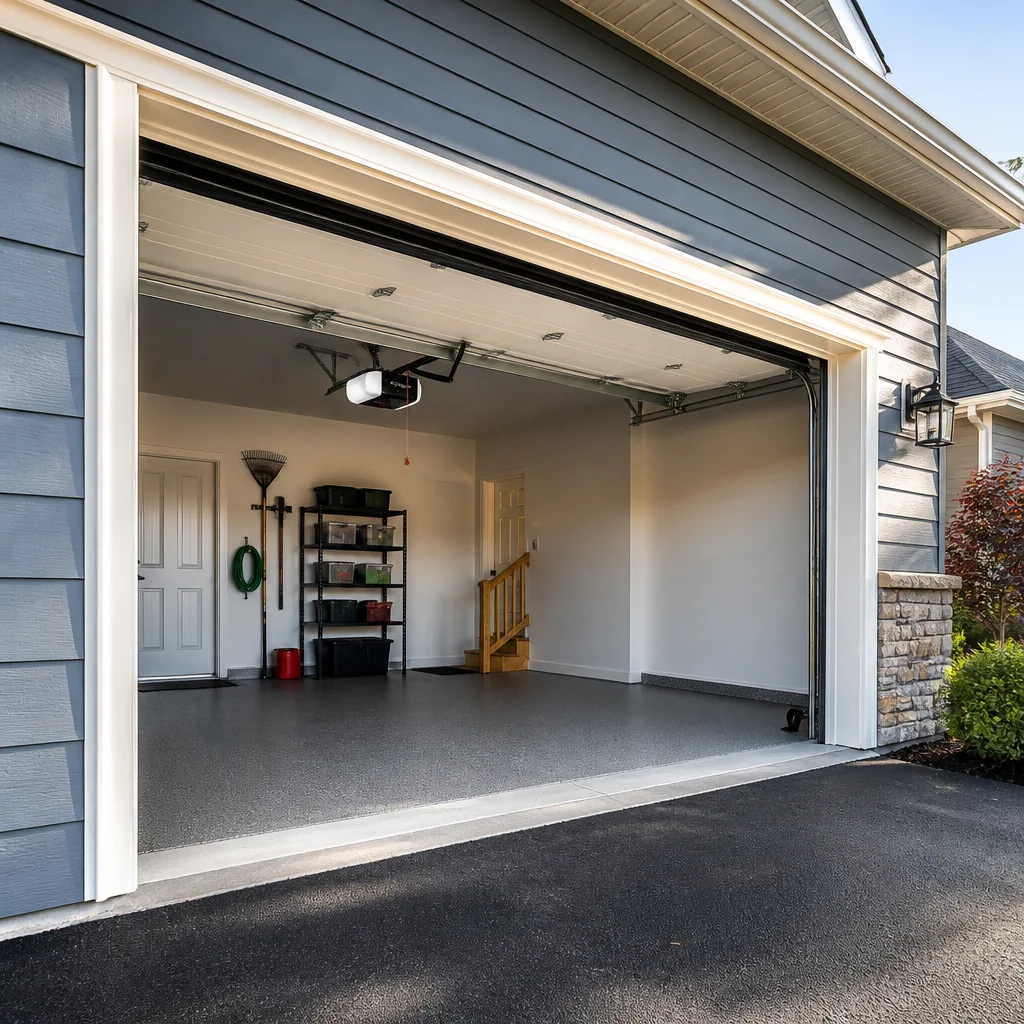
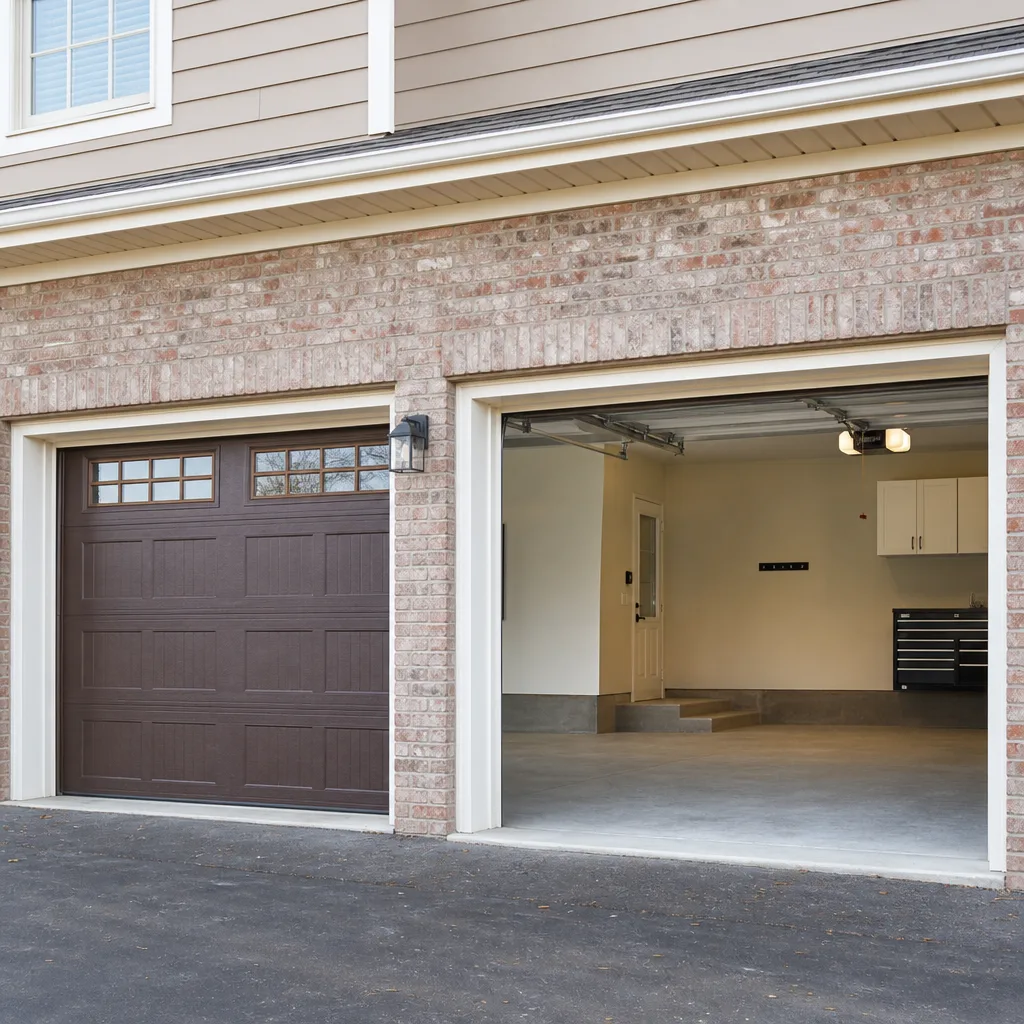
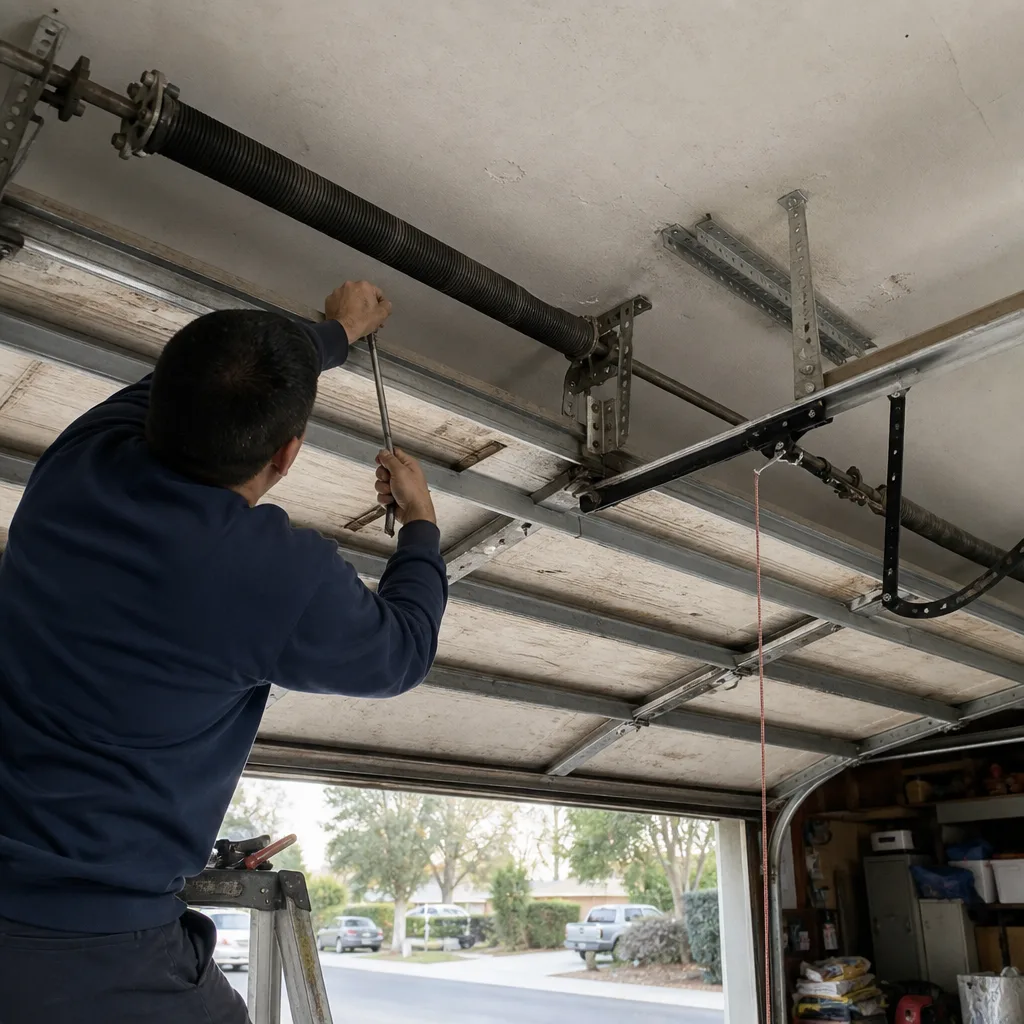 Before
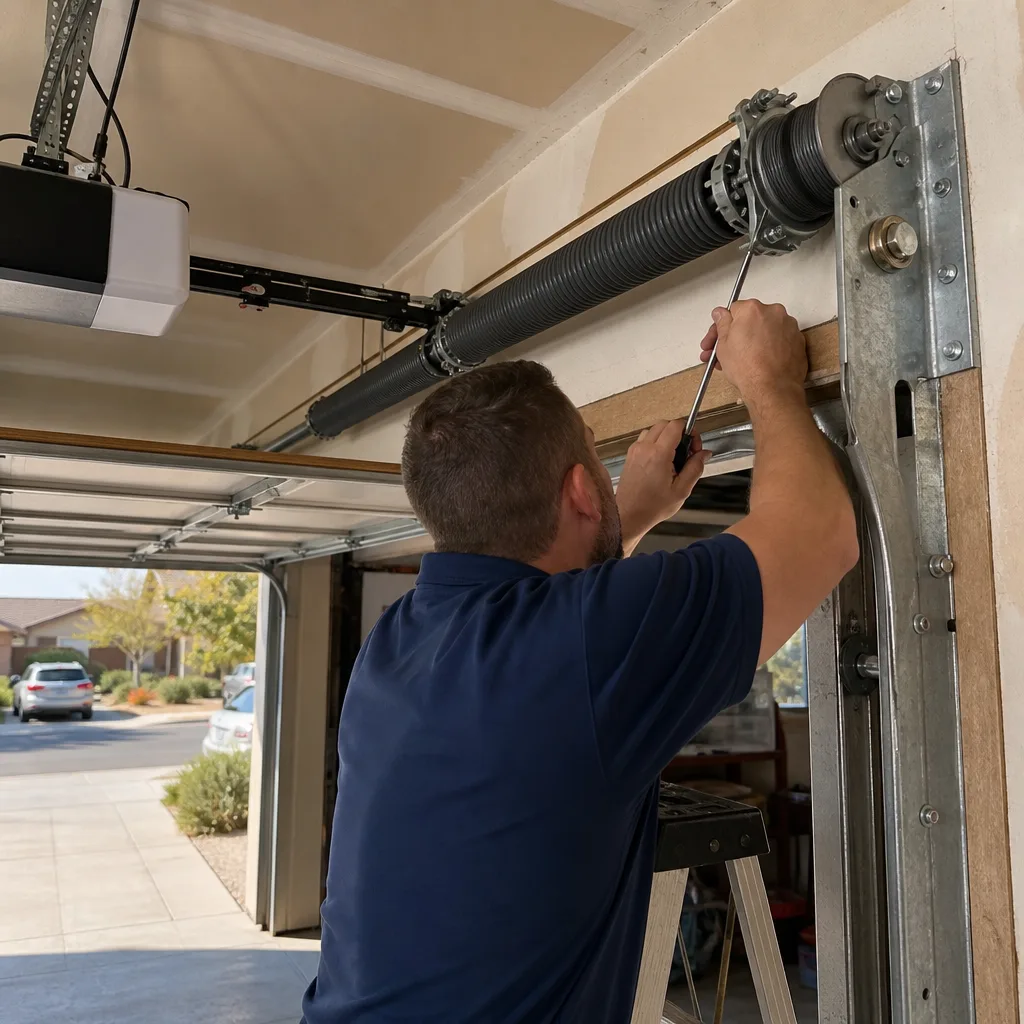 After
After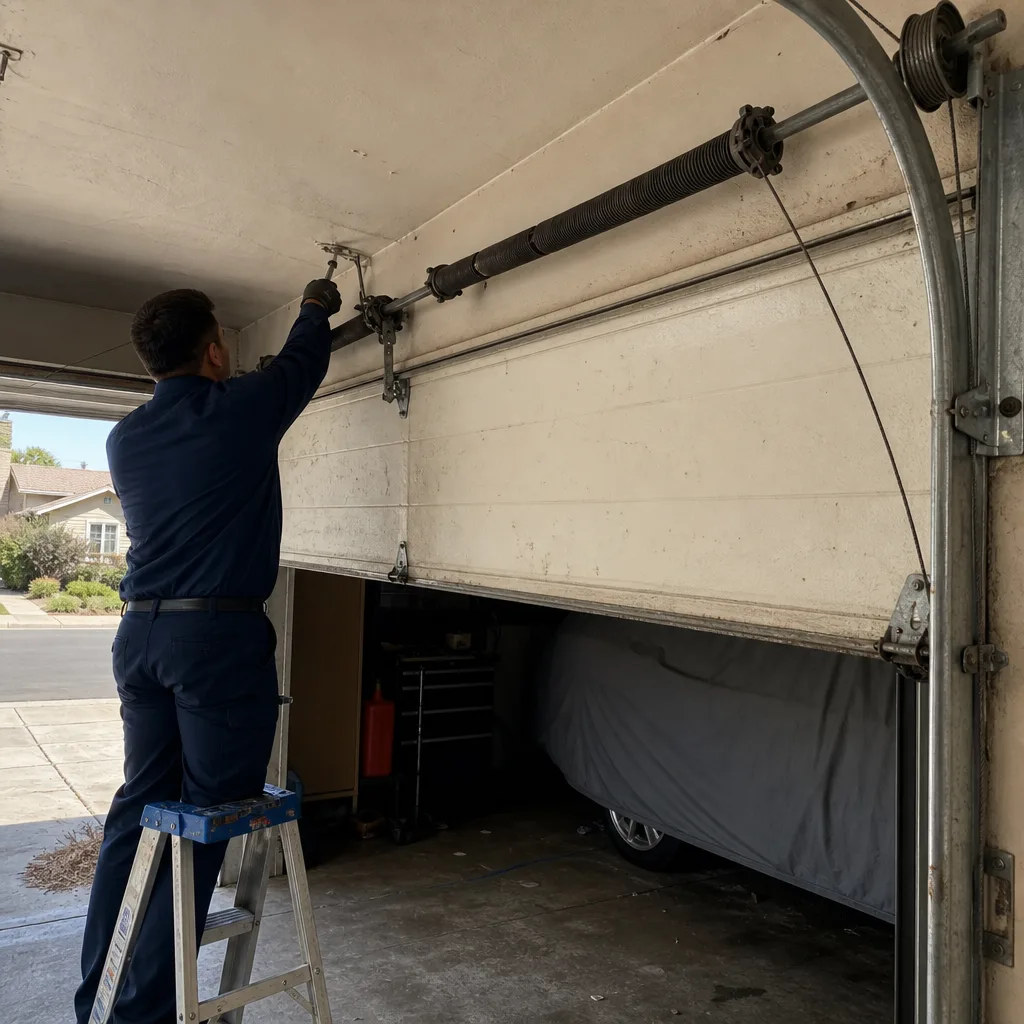 Before
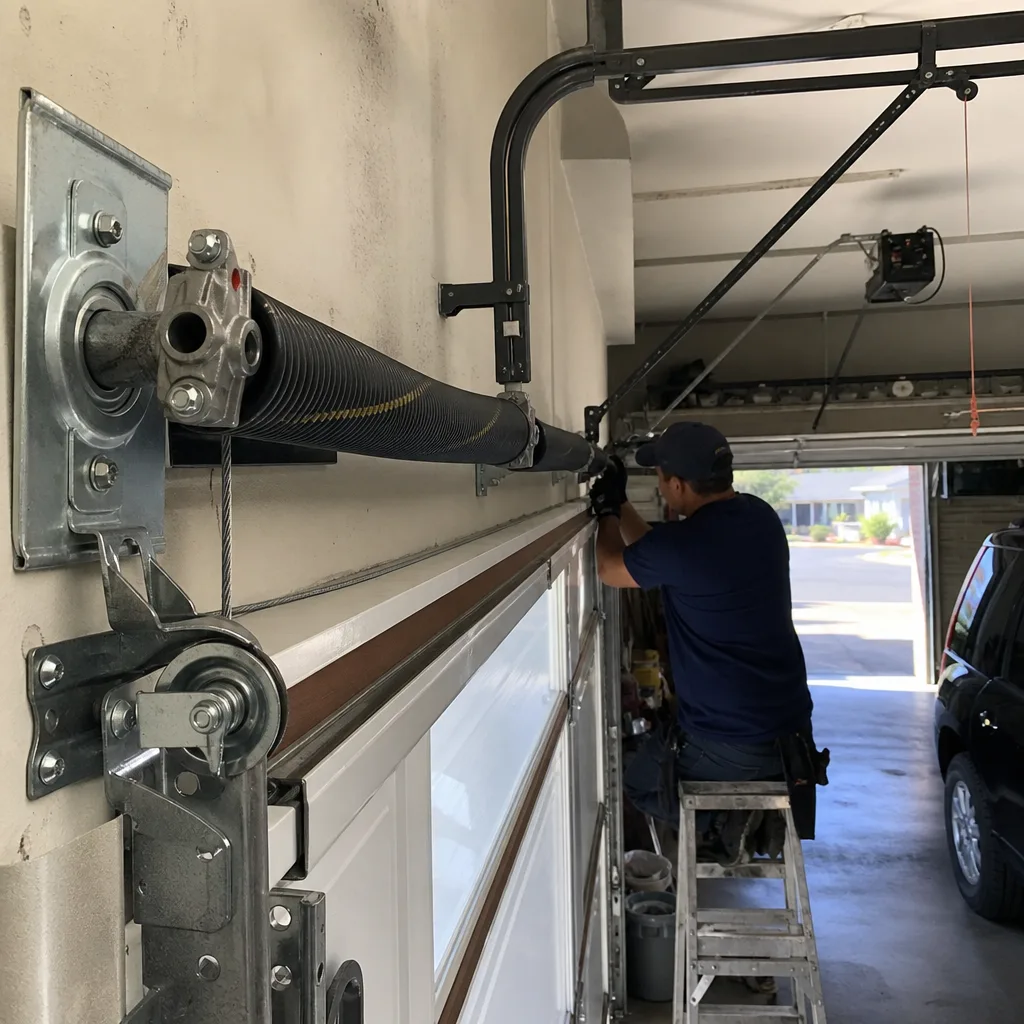 After
After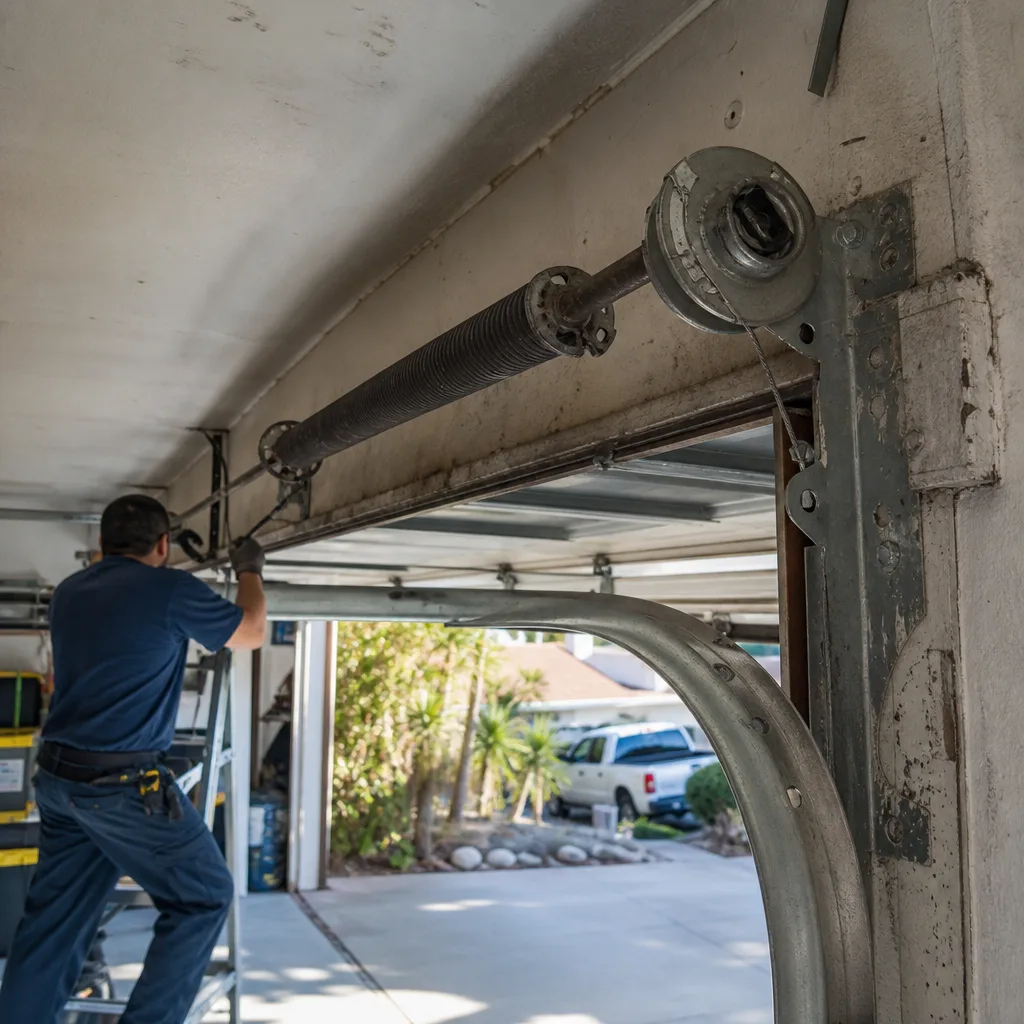 Before
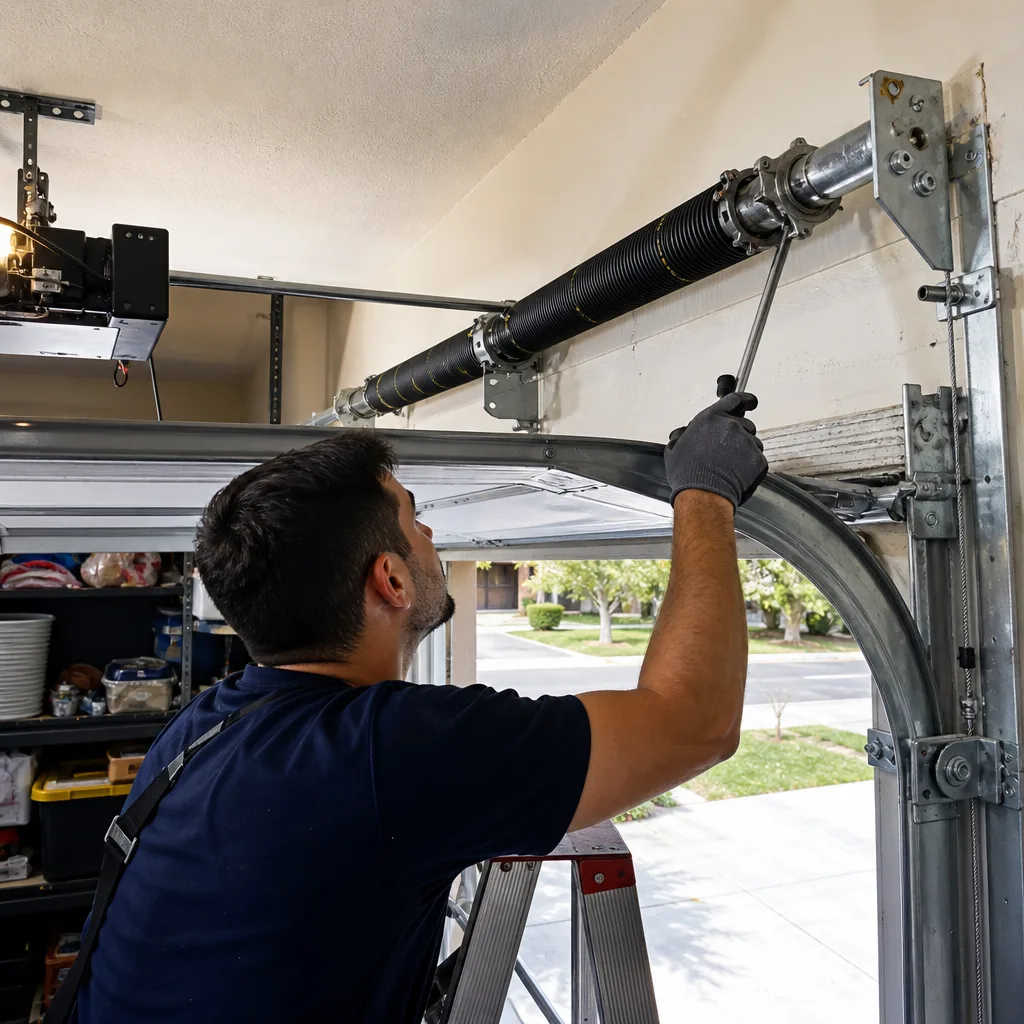 After
AfterGarage Door Repair Maintenance Checklist for Santee Homeowners
A can of WD-40 on the wrong part of a garage door spring doesn’t maintain it - it accelerates the failure. We’ve seen this exact mistake in Santee garages from Sky Ranch to Riverwalk, where a well-meaning homeowner turns a $200 tune-up into a $600 spring replacement. The truth is that most garage door maintenance checklists recycle the same five generic tips. This guide gives you a task calendar you can print and post, explains what each observation actually means, and draws a clear line between what you can safely handle Saturday morning and what requires a trained technician with the right tools. If you own a home in Santee and plan to stay, this is the maintenance framework that protects your door and your safety.
Quick Answer
Garage door maintenance for Santee homeowners means a monthly visual inspection, a quarterly balance and reverse-safety test, an annual hardware tightening and track cleaning, and lubrication of specific components with the correct products - never WD-40 on springs. Tasks involving spring tension, cable adjustment, or opener force settings should be left to a licensed technician.
Table of Contents
- How Santee’s Climate Wears Your Garage Door Differently
- Monthly Inspection Tasks (10 Minutes)
- Quarterly Tests and Adjustments (20 Minutes)
- Annual Deep Maintenance (45 Minutes)
- What to Lubricate, What to Avoid, and Why WD-40 Damages Springs
- Printable Task Calendar: Monthly, Quarterly, Annual
- Common Mistakes to Avoid
- When to Call a Professional
- Frequently Asked Questions
How Santee’s Climate Wears Your Garage Door Differently
Santee sits in a valley bowl where summer temperatures routinely climb past 95°F and winter mornings can dip into the high 30s. That 50-degree swing matters more than most homeowners realize.
The rubber bottom seal on your garage door is the first casualty. In Santee’s dry heat, that seal hardens and cracks on a predictable schedule - typically 18 to 24 months if your door faces west or south, where afternoon sun bakes the driveway. Once the seal loses flexibility, it no longer compresses against the threshold. Gaps form. Dust, pollen, and occasional rodent visitors from the nearby San Diego River corridor find their way in. We’ve replaced seals in Santee homes where the rubber had turned to something resembling hard plastic, crumbling at the touch.
The torsion spring above your door is affected too, though less visibly. Metal expands in heat and contracts in cold. Over years of cycling, that thermal stress accumulates alongside the mechanical fatigue of lifting a 150 to 400-pound door. Santee’s temperature range is moderate compared to desert climates, but the cumulative effect on a spring that’s already cycling 1,500 times per year is real. Springs in west-facing garages, where afternoon heat peaks, tend to show fatigue earlier.
Then there’s the coastal influence. Santee is far enough inland to avoid direct salt air, but Santa Ana wind events carry marine moisture and occasional salt particulates. Hinges and rollers in garages with poor ventilation show surface corrosion earlier than those in drier inland climates like El Cajon or Alpine. A quick monthly wipe-down of metal hardware prevents the pitting that seizes rollers and binds tracks.
Finally, the soil. Santee’s hillside developments - think Carlton Hills, Sky Ranch, the upper reaches near Mast Park - can experience subtle ground movement during winter rains. That movement transfers to the garage door frame. A door that was perfectly aligned in October may show track gap or binding by March. The annual inspection section below explains how to spot this before it damages the door or opener.
The point is simple: a generic maintenance checklist ignores where you live. This one doesn’t.
Monthly Inspection Tasks (10 Minutes)
These tasks require no tools beyond a flashlight and your eyes. Do them on the first Saturday of each month. The goal is early detection, not repair.
- Visual scan of all hardware. Stand inside your garage with the door closed. Look at every hinge, roller bracket, and track mounting bolt. You’re checking for obvious rust, loosening, or anything that looks different from last month. A bolt that has backed out even a quarter turn will show a bright, unoxidized thread. Catch it now and a socket wrench fixes it in seconds. Miss it, and the bracket shifts, the roller binds, and the door starts opening crooked.
- Roller condition check. Nylon rollers should spin freely and show no flat spots or cracking. Steel rollers should turn without grinding. If a roller is seized or wobbling in its bracket, it needs replacement. This is a common failure point we see in Santee’s older neighborhoods like Riverwalk and the original Santee subdivisions near Mission Gorge, where doors are often 20-plus years old.
- Cable inspection - look, don’t touch. The lift cables run vertically along each side of the door. Examine them for fraying, kinking, or broken strands. A cable with even one broken strand is a cable that will fail. Do not attempt to adjust or replace cables yourself. They are under extreme tension and can cause serious injury. Note the condition and call a technician if you see damage.
- Spring visual check. Look at the torsion spring above the door (or the extension springs along the horizontal tracks, if that’s what your door has). Check for a visible gap in the coils, rust flaking, or any sign the spring is separating from its mounting cone. A gap in a torsion spring means it has broken. Stop using the door immediately.
- Weatherstripping and seal. Close the door and look at the bottom seal from outside. Is it making continuous contact with the floor? Are there cracks, flattening, or missing sections? In Santee, check this more carefully in September, after the summer heat has done its damage, and in March, after winter temperature swings.
- Opener rail and chain/belt. Look along the opener rail for excess slack in a chain drive, or visible wear in a belt drive. Listen for any new grinding or clicking when the door operates. Note changes - don’t attempt rail alignment yourself.
That’s it. Ten minutes. If everything looks unchanged, you’re done until next month. If you spot something, you now have time to schedule service before it becomes an emergency.
Quarterly Tests and Adjustments (20 Minutes)
These tests verify that your door’s safety systems are actually working. Perform them in January, April, July, and October. You’ll need a stepladder and a 2×4 piece of wood.
The Balance Test
A properly balanced door stays in place when stopped at any height. An unbalanced door drifts up or down, which means the spring tension is wrong. The opener then works harder, wears faster, and may fail to reverse properly in an emergency.
- Close the door fully.
- Pull the red emergency release cord to disconnect the opener.
- Lift the door manually to about waist height - roughly three feet off the ground.
- Let go gently.
What the result means:
- Door stays put: Balance is correct. Reconnect the opener and you’re done.
- Door drifts down: Spring tension is insufficient. The door is heavier than it should be for the opener. Schedule spring adjustment.
- Door drifts up: Spring tension is excessive. This is less common but still wrong. Schedule adjustment.
- Door is hard to lift or won’t stay open at all: Spring is likely broken or severely fatigued. Do not use the door. Call for service.
Never attempt to adjust spring tension yourself. Torsion springs store enough energy to cause serious injury or death. Extension springs, while somewhat safer, still require specific knowledge and tools. This is the line between homeowner maintenance and professional service.
The Reverse-Safety Test
All automatic garage door openers manufactured after 1993 must reverse direction when encountering an obstruction. This prevents entrapment.
- Place the 2×4 flat on the floor directly under the center of the door path.
- Close the door using the remote or wall button.
- The door should touch the 2×4 and immediately reverse.
If the door stops on the 2×4 but does not reverse, the force setting is too high. Do not adjust the force setting yourself - these dials interact with the opener’s internal logic in ways that affect both safety and long-term motor wear. A technician can calibrate this correctly in minutes.
If the door crushes or moves the 2×4 without reversing, stop using the opener immediately. The safety system has failed. This is an emergency repair situation.
The Photo-Eye Test
The photo eyes sit four to six inches off the floor on either side of the door track. They project an invisible beam across the door opening.
- Close the door.
- Wave a broomstick through the beam path while the door is descending.
- The door should reverse immediately.
Clean the photo-eye lenses with a soft cloth while you’re at it. Santee’s dusty summer conditions and occasional Santa Ana debris can coat the lenses enough to cause false obstructions. Check alignment too - the LED indicators on most units (LiftMaster, Chamberlain, Genie) show green when aligned and red or blinking when they’re not.
Annual Deep Maintenance (45 Minutes)
Once per year - we suggest October, before winter rains and holiday garage use peaks - perform this more thorough service. Set aside a full morning. If any step reveals a problem beyond your comfort, garage door repair in Santee is a phone call away.
Hardware Tightening
Garage doors vibrate through thousands of cycles. Bolts loosen. Use a socket wrench to check every nut and bolt you can reach on the door panels, hinges, and track mounting brackets. Do not overtighten - snug is correct. Overtightening strips threads in thin-gauge steel or cracks nylon rollers.
Pay special attention to the bolts that attach the bottom fixture (the bracket holding the bottom roller and cable) to the door. These carry the full lifting load and are the most critical fasteners on the entire door. If any bottom fixture bolt is loose, stop and call a technician. This is not a standard maintenance item.
Track Cleaning and Alignment Check
Wipe the inside faces of both vertical and horizontal tracks with a clean rag. Remove accumulated grease, dirt, and hardened lubricant. Old grease attracts grit, which acts like sandpaper on rollers.
Check track alignment with a level. Vertical tracks should be perfectly plumb. Horizontal tracks should slope slightly down toward the back of the garage - about a quarter inch per foot. If tracks have shifted, especially in Santee’s hillside areas where seasonal ground movement occurs, do not attempt to bend or shim them yourself. Track realignment requires specific spacing tools and knowledge of door geometry.
Panel and Paint Inspection
Steel doors: check for rust spots, especially at panel edges and anywhere the factory finish has been scratched. Sand small spots, prime with rust-inhibiting primer, and touch up with matched paint. Left untreated, rust penetrates from the outside in and weakens panels.
Wood doors: look for water staining, delaminating plywood, or cracked solid wood. Santee’s occasional winter rains can penetrate if the top edge seal has failed. Wood doors require more frequent refinishing than most homeowners expect - every two to three years in full sun exposure.
Fiberglass or composite doors: check for UV chalking, surface cracks, or seal failure around window inserts. These materials handle Santee’s heat well but can become brittle after 15-plus years of sun exposure.
Opener Gear and Drive Inspection
Listen to your opener during a full open-close cycle. Grinding, squealing, or rattling that wasn’t there last year indicates wear in the drive gear, sprocket, or rail system. Chain drives may need tension adjustment. Belt drives rarely need service but should be inspected for cracking or fraying.
If your opener is more than 12 years old and showing signs of strain, start budgeting for replacement. Modern openers - we install LiftMaster, Chamberlain, and Genie units regularly - offer safety and efficiency improvements that justify the investment, especially if your current unit lacks the automatic reverse feature or has a worn gear set that’s simply waiting to fail.
What to Lubricate, What to Avoid, and Why WD-40 Damages Springs
This is where most maintenance guides fail homeowners. They say “lubricate moving parts” and move on. Specificity matters. The wrong product on the wrong component causes damage that shows up months later.
The WD-40 Problem
WD-40 is a water-displacing solvent, not a lubricant. It contains mineral spirits and other volatile compounds that dissolve existing grease. When sprayed on a torsion spring, it strips the protective coating that manufacturers apply to prevent corrosion. The spring then rusts from the inside out, accelerating metal fatigue. We’ve replaced springs in Santee that failed years early because of this exact mistake.
Worse, WD-40 attracts dust and grit. Applied to rollers or hinges, it creates an abrasive paste that wears bushings and pins. The door gets louder, not quieter, within weeks.
What to Use Instead
For garage doors, use a lithium-based grease or a dedicated garage door lubricant. These products stay where you put them, resist dust, and protect metal surfaces. Apply sparingly - excess lubricant drips on your car and collects dirt.
Component-by-Component Guide
| Component | Product | Method | Frequency |
|---|---|---|---|
| Hinges (pivot points) | White lithium grease | One drop per pivot pin | Annually |
| Roller bearings (steel rollers) | Light machine oil or dedicated roller lube | Two drops per bearing, wipe excess | Annually |
| Nylon rollers | None - bearings are sealed | Replace when worn, do not lubricate | N/A |
| Torsion spring | Garage door spring lubricant or light motor oil | Light coating across coils, wipe excess | Annually |
| Extension springs | Same as torsion | Light coating, check safety cables | Annually |
| Track interior | None - clean only | Wipe with solvent, leave dry | Annually |
| Chain drive | Manufacturer-specified chain lube | Per opener manual | As needed |
| Screw drive | Lithium grease per manufacturer | Apply to rail, run door to distribute | Annually |
| Weatherstrip | Silicone spray or rubber conditioner | Light spray, wipe excess | Semi-annually |
Notice what’s not on this list: the track. Never lubricate the track interior. Rollers are meant to roll, not slide. Oiled tracks cause rollers to skid, which wears flat spots and damages the door’s vertical alignment.
Also notice: nylon rollers have sealed bearings. Adding lubricant breaks the seal and draws in contaminants. When nylon rollers wear, replace them. They’re inexpensive and tool-free to swap on most doors.
Printable Task Calendar: Monthly, Quarterly, Annual
Print this section and post it inside your garage, near the opener wall button. Check off tasks as completed.
Monthly - First Saturday (10 Minutes)
- Visual hardware scan
- Roller condition check
- Cable inspection (look only)
- Spring visual check
- Bottom seal condition
- Opener rail and drive visual
Quarterly - January, April, July, October (20 Minutes)
- Balance test with emergency release
- Reverse-safety test with 2×4
- Photo-eye beam test and lens cleaning
- Photo-eye alignment check
Annual - October (45 Minutes)
- Hardware tightening (all accessible bolts)
- Track cleaning and alignment check
- Panel rust, paint, or wood condition
- Opener gear and drive inspection
- Lubrication of specified components
- Weatherstrip silicone treatment
- Review and replace any worn rollers
In Santee, add these climate-specific checks:
- September: Inspect bottom seal for summer heat damage
- March: Check for track shift after winter rains, especially in hillside neighborhoods
- After any Santa Ana wind event: Clear debris from photo-eye lenses and track openings
Common Mistakes to Avoid
- Spraying WD-40 on torsion springs. We’ve covered this, but it bears repeating. The solvent strips protective coating, accelerates internal rust, and attracts abrasive grit. Use a dedicated spring lubricant or light motor oil applied with a rag.
- Ignoring a door that “just got a little noisy.” Noise is symptom, not character. A grinding door has a failing roller, a loose bearing, or a opener gear wearing to metal-on-metal. Each of these progresses to complete failure. Address noise when you first notice it.
- Adjusting opener force settings to compensate for a heavy door. If your door won’t stay closed or the opener strains, the problem is spring balance or track alignment - not opener force. Cranking the force dial masks the real issue and disables the safety reverse system. This is how doors crush objects or injure people.
- Lubricating the track interior. Tracks guide; they do not reduce friction. Oiled tracks cause roller sliding, flat spots, and premature wear. Clean tracks with solvent and leave them dry.
- Skipping the emergency release test. Many Santee homeowners have never pulled the red cord. In a power outage or opener failure, you need to know the door moves freely by hand. Test it quarterly. If the door won’t lift manually, the spring balance is wrong or a roller is binding.
- Delaying weatherstrip replacement. A cracked bottom seal seems cosmetic until ants, mice, or water enter. In Santee’s dry climate, homeowners underestimate how much conditioned air escapes through a failed seal, and how quickly pests exploit the gap.
- DIY spring replacement from an online video. Torsion spring winding requires specific tools, specific knowledge, and respect for the stored energy. We’ve responded to emergency calls where a homeowner’s wrench slipped, the winding bar flew, and the result was a hospital visit. The money saved is not proportional to the risk assumed.
When to Call a Professional
Some observations mean you put the wrench down and pick up the phone. Call a technician if you see: a gap in a torsion spring, frayed or kinked cables, a door that won’t balance, a bent or misaligned track, an opener that fails the reverse test, or any hardware on the bottom fixture that has loosened or broken.
Carl Dutton and the team at Mainspring Garage Door Co. have served Santee since 2016, and the company has been rooted in this region since 1984. We carry springs, cables, rollers, and openers for all major brands on every truck, so most jobs finish in a single visit. The flat price is stated before any work begins - no surprises on the bill. Every repair is covered by our 90-Day Done Right Promise, in writing, with no dispute process.
Mainspring Garage Door Co. home | Garage Door Installation in Santee | Garage Door Opener in Santee
Free estimates in Santee - call (619) 762-3668. A live person answers, 24/7.
Frequently Asked Questions
Professional annual maintenance from a licensed technician in Santee typically runs $89 to $150, depending on door size and condition. Mainspring offers a $89 Seasonal Tune-Up that includes balance testing, safety checks, hardware tightening, and proper lubrication of all components. Call (619) 762-3668 to schedule - estimates are free.
Homeowners can safely perform monthly visual inspections, quarterly balance and safety tests, and annual track cleaning. Any work involving spring tension, cable adjustment, opener force settings, or track realignment requires a trained technician. The risk of serious injury from high-tension springs and cables outweighs any cost savings from DIY repair.
In Santee’s heat, expect 18 to 24 months for standard rubber seals on west or south-facing doors. Vinyl and thermoplastic seals last longer, typically 3 to 4 years. Replace when you see cracking, flattening, or light visible through gaps when the door is closed. After replacement, apply silicone spray every six months to extend life.
Sudden noise usually indicates a failing roller bearing, a loose hinge, or opener gear wear. Grinding suggests metal-on-metal contact. Squealing points to a dry bearing. Rattling often means a loose bolt or bracket. Identify the noise source during a slow manual cycle with the opener disconnected, then call for targeted repair before the failure progresses.
Chain drive openers need lubrication only when the manufacturer specifies, typically every 1 to 2 years with dedicated chain lubricant. Over-lubrication attracts dust and creates abrasive buildup. Belt drives and screw drives have different requirements - consult your manual. If you’ve lost the manual, a technician can identify your opener model and advise correctly.
Reputable technicians carry parts for all major brands. Mainspring’s trucks are stocked for LiftMaster, Chamberlain, Genie, Clopay, Amarr, Wayne Dalton, Craftsman, and Raynor systems. Most repairs in Santee are completed in a single visit because the correct spring, cable, roller, or opener component is already on the truck.
The Bottom Line
Garage door maintenance is not complicated, but it is specific. The Santee homeowner who spends ten minutes monthly, twenty minutes quarterly, and one morning annually will catch problems early, extend door life by years, and avoid the emergency repair that always seems to happen at the worst moment. Use the right lubricants on the right components. Know which tasks are yours and which belong to a trained technician with the proper tools. Post the calendar. Follow it. And when something falls outside your comfort, call someone who will quote the flat price before the wrench comes out and stand behind the work in writing.
Written by Carl Dutton, Owner at Mainspring Garage Door Co., serving Santee since 2016.